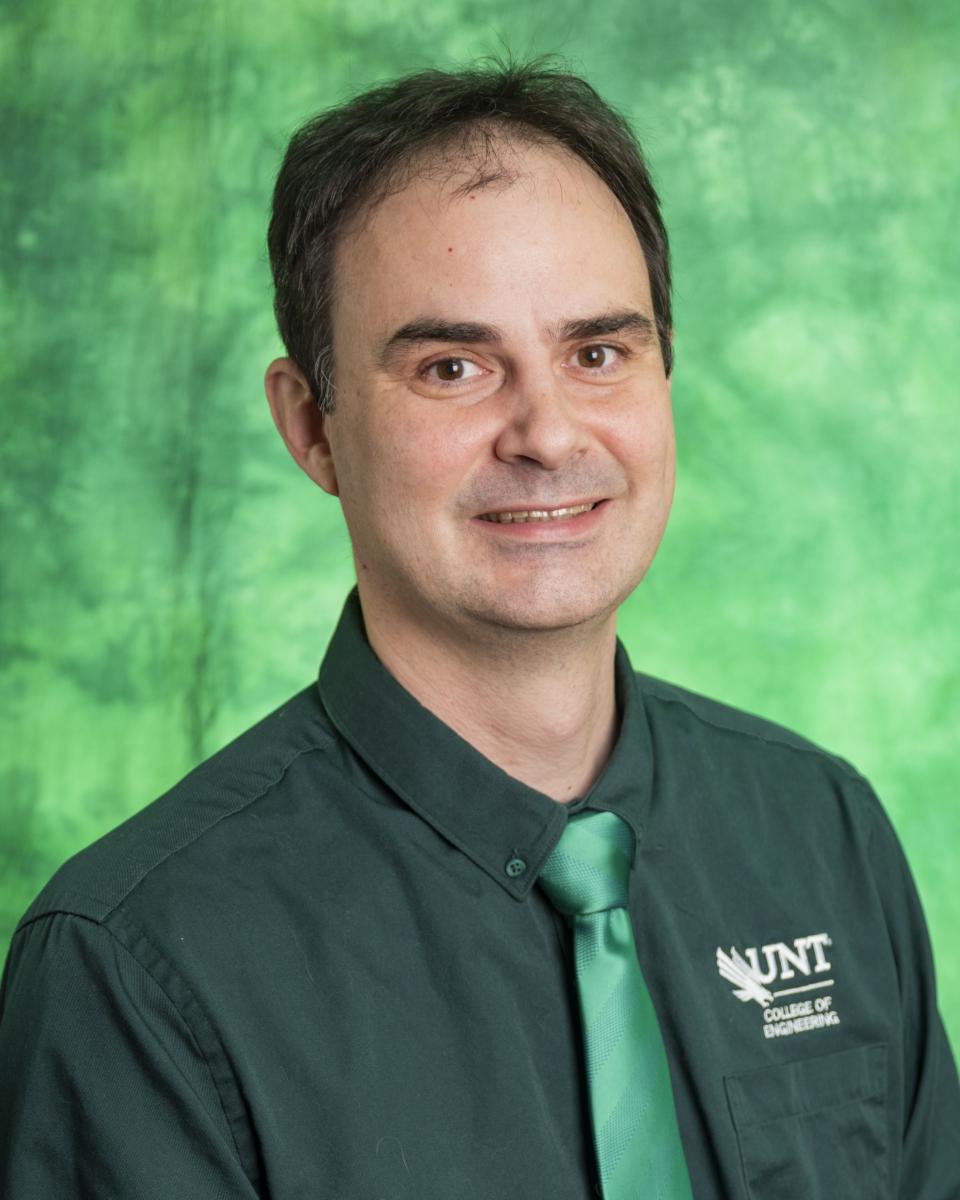
My research interests include Secure Systems Architecture, Cryptography and Low Power VLSI. Various projects I have been involved so-far are listed below:
Testing Framework
New security architectures are difficult to prototype and test. They require interactions between hardware, operating systems, and applications, making them hard to simulate and monitor. In this project we are designing and prototyping a testing framework using a virtualization platform which emulates the behavior of new hardware security architecture in the virtual CPU, and performs a wide range of hardware and software attacks on the system under test. Our testing framework significantly speeds up development of the testing environment and infrastructure, and provides APIs for launching attacks and monitoring the effects of an attack on the hardware and software layers, which is especially convenient during the design and validation phases for new hardware software architectural solutions.
| Author | Title | Year | Journal/Proceedings | DOI/PDF |
|---|---|---|---|---|
| Dwoskin, J., Gomathisankaran, M. & Lee, R. | Framework for Design Validation of Security Architectures | 2008 | Princeton University Technical Report (CE-L2008-013) |
Secure Systems Architecture
My research in this area started with solving the fundamental problem of enabling the micro-architecture to provide tamper resistant isolated execution environments for protected applications (Arc3D). The threat model included Operating Systems, Hardware and Software based attacks. I also looked at the problem of verifying the integrity of the embedded systems device (TIVA). Currently I am looking at the problem using virtualization to develop a test-bed to test these micro-architectural solutions.
| Author | Title | Year | Journal/Proceedings | DOI/PDF |
|---|---|---|---|---|
| Gomathisankaran, M. & Tyagi, A. | Architecture Support for 3D Obfuscation | 2006 | IEEE Trans. Computers Vol. 55(5), pp. 497-507 |
DOI PDF |
| Gomathisankaran, M. & Tyagi, A. | TIVA : Trusted Integrity Verification Architecture | 2005 | DRMTICS 2005, Sydney, Australia, October 31 - November 2, 2005, pp. 13-31 | DOI PDF |
| Gomathisankaran, M. & Tyagi, A. | Arc3D : A 3D Obfuscation Architecture | 2005 | High Performance Embedded Architectures and Compilers (HiPEAC), pp. 184-199 | DOI PDF |
| Gomathisankaran, M. & Tyagi, A. | How to Hide Secrets from Operating System: Architecture Level Support for Dynamic Address Trace Obfuscation | 2004 | Iowa State University Technical Report |
Cryptography
Conventional block ciphers (DES,AES,Serpent) derive their security from an embedded secret, more commonly referred to as a key. One of the inputs, key, in each round is secret whereas the round functions themselves are public. The secret, however, is combined with the state in a limited way, as an xor, during each round. I am investigating a simple yet novel approach wherein the round functions themselves become the secret, while the function schema is a publicly published algorithm. The intuition is to use reconfigurable gates as round functions and define their configurations as the secret (or key). Hence the complexity of such a cryptographic function is derived from the fact that almost all of the round processing is driven by the secret (truth tables).
The main advantages of our design are:
- Key size much greater than the block length can be easily accommodated. This allows for higher security guarantees without having to increase the latency of cipher operation.
- Smaller block lengths are well-suited for processor level instruction encryption when the encryption system is placed in-line into a processor pipeline.
- Area and time efficient hardware implementation reduces the processing overhead drastically for security.
- Simplicity of the design.
| Author | Title | Year | Journal/Proceedings | DOI/PDF |
|---|---|---|---|---|
| Gomathisankaran, M., & Lee, R.B. | Maya: A Novel Block Encryption Function | 2009 | Accepted in WCC2009 | |
| Gomathisankaran, M. & Lee, R.B. | Tantra: A fast PRNG algorithm and its implementation | 2009 | Accepted in SAM'09 | |
| Gomathisankaran, M., Keung, K.-M. & Tyagi, A. | REBEL: Reconfigurable Block Encryption Logic | 2008 | International Conference on Security and Cryptography (SECRYPT) | |
| Gomathisankaran, M. & Tyagi, A. | Relating Boolean Gate Truth Tables to One-Way Functions | 2008 | IEEE International Conference on Electro/Information Technology |
Low Power VLSI
The increasing sub-threshold leakage current levels with newer technology nodes has been identified by ITRS as one of the major fundamental problems faced by the semiconductor industry. SRAM arrays which are used widely as a system component, such as caches and register files, in both high-performance and portable systems, are getting to be dominant power consumers because of their large capacity and area. Hence any reduction in cache energy can result in considerable overall power reduction. I proposed a novel circuit technique using depletion mode devices, to reduce the static energy of SRAM array in an on-chip cache by 90% without any performance impact.
[ Warm SRAM ]
| Author | Title | Year | Journal/Proceedings | DOI/PDF |
|---|---|---|---|---|
| Gomathisankaran, M. & Tyagi, A. | WARM SRAM : A Novel Scheme to Reduce Static Leakage Energy in SRAM Arrays | 2006 | J. Low Power Electronics Vol. 2(3), pp. 388-400 |
DOI PDF |
| Gomathisankaran, M. & Tyagi, A. | WARM SRAM : A Novel Scheme to Reduce Static Leakage Energy in SRAM Arrays | 2004 | ISVLSI, pp. 105-114 | DOI PDF |